Menu


James Owens, Former Deputy District Attorney
San Francisco is a consolidated city and county, which means one court system, one District Attorney's Office, and — for most criminal defendants — one building where everything begins. This page explains what actually happens after an arrest here, where your case will be heard, and where the early opportunities in a San Francisco case live. For the full picture of how James Owens defends each type of charge, the practice pages linked below go deep; this page covers the ground they stand on.
If your matter is urgent, skip ahead. Call (415) 824-4000, email consult@owensdefense.com, or request a confidential consultation.
Most criminal matters in San Francisco run through the Hall of Justice at 850 Bryant Street, which handles arraignments, custody matters, and most felony proceedings, with some matters heard at the Civic Center Courthouse on McAllister Street depending on the department and case type. People held after arrest are booked at the county jail facilities in the same complex, which means custody, arraignment, and the first days of a case all move through one address. James appears at 850 Bryant regularly and represents clients there at every stage, from arraignment through pretrial motions, negotiations, and trial.
San Francisco resolves many arrests with a citation and release — a signed promise to appear, with a court date weeks out — rather than extended custody, while more serious matters mean booking and a quick arraignment. Either way, the sequence that follows is the same. The District Attorney's Office reviews the case and decides what to file, arraignment happens on a short timeline if charges are filed, and the court addresses custody, release conditions, and protective orders at that first appearance.
Two features of the San Francisco process deserve attention. First, custody decisions here often turn on risk assessment and release conditions rather than simply on posting bail, which means the argument at arraignment is about supervision terms, protective orders, and the client's stability and ties — an argument that rewards preparation and punishes improvisation. Second, the citation-and-release pattern lulls people.
A citation feels minor, and the weeks before the court date feel like waiting time. They are not.
That window is when the charging decision is being made, when defense counsel can still reach the deputy with context the police report lacks, and when the evidence that helps you is still recoverable. James spent his prosecutorial career on the receiving end of those early defense contacts, so he knows what actually moves a filing decision and how to make the window count.
More than any other Bay Area county, San Francisco cases can turn out to be federal ones. The city sits alongside an active U.S. Attorney's Office that has run a sustained drug-enforcement initiative pulling street- and mid-level cases into federal court, and the Presidio and other federal enclaves inside the city mean that ordinary conduct—a DUI, an assault—becomes a federal matter purely because of where it happened. If federal agents appear anywhere in your case, or your citation lists a federal court, the rules, the deadlines, and the stakes all change. James handles both systems, and the Federal Criminal Defense page covers that arena in full.
James represents clients facing misdemeanor and felony charges in San Francisco, including:
San Francisco's docket has its own texture. Drug enforcement has intensified in recent years, with both state and federal cases rising, and charging philosophy citywide has moved toward firmer filing than a few years ago. Whatever the charge, the pages above explain the defense; this page explains the terrain.
Owens Defense represents people arrested or charged throughout the City and County of San Francisco, including in the Tenderloin, SoMa, the Mission District, Chinatown, the Richmond and Sunset Districts, Bayview–Hunters Point, the Castro, North Beach, and the Financial District — and the many visitors, commuters, and out-of-state residents who are charged in San Francisco and need local counsel. The firm's office is at 1390 Market Street, minutes from both courthouses.
Yes, and the citation is exactly why. The weeks before your appearance are when the DA's Office decides what to file, and that decision can still be influenced by counsel who reaches the charging deputy in time. Waiting until the court date means arriving after the most movable moment in the case has passed.
The court formally advises you of the charges, addresses custody or release conditions, and sets the schedule. In San Francisco, the release argument often centers on conditions and risk rather than bail alone, so protective orders, stay-away terms, and supervision requirements get decided in that room — terms that shape your life for the months the case is pending. Walking in with prepared counsel changes what is possible at that hearing.
Usually state, but San Francisco produces more federal crossover than people expect, through the federal drug-enforcement push and the city's federal enclaves like the Presidio. Your paperwork tells the story — a federal citation or contact from federal agents means a different court and different rules. Bring everything you received to the first conversation and James will confirm which system you are in.
Some can. Diversion and alternative resolutions exist for certain charges and histories, and eligibility gets determined case by case with prosecution discretion that advocacy can move. What is realistic in your case depends on the charge and the facts, and it is one of the first assessments James makes.
At 1390 Market Street, Suite 200, in the Civic Center corridor, minutes from both the Hall of Justice and the McAllister courthouse. Consultations are private and confidential.
If you have been arrested, cited, or contacted by investigators in San Francisco, the most movable phase of your case is happening right now. Call (415) 824-4000, email consult@owensdefense.com, or request a confidential consultation.
Free Consultation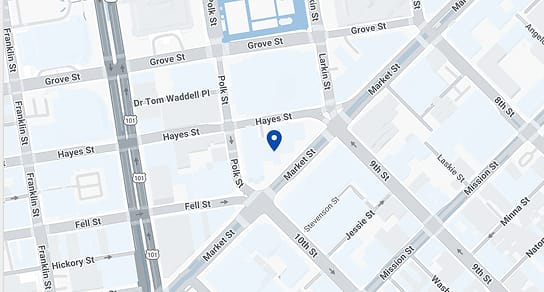
© 2026 Owens Defense, P.C.
| View Our Disclaimer | Privacy Policy
Law Firm Website Design by The Modern Firm